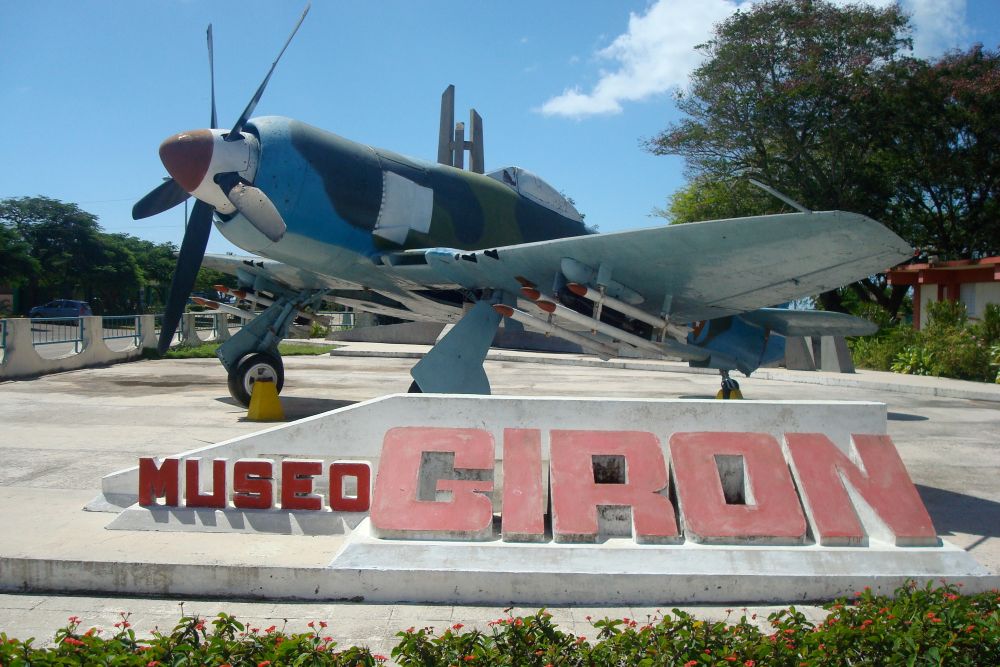
Playa Girón, a Museum: This little, unassuming museum commemorating Cuba’s April 1961 victory over a CIA-trained, US-organized invasion force at Playa Girón (also known as the Bay of Pigs) reflects the biblical parable of “David versus Goliath” that many Cubans used to explain the significance of that moment. Facing a voluntary militia and standing armed force of over 300,000 Cubans, the slightly more than 2,000 Cuban exiles who made up the US force, called Brigade 2506, were supposed to have holed up in the Escambray Mountains and launched a guerrilla war from there against the revolutionary state. Yet almost from the moment they landed, Brigade 2506 did not stand a chance. Whatever they may have thought of Fidel Castro’s unexpected mass nationalization of private businesses a few months before, most island Cubans supported the defense of their country because they wanted to reverse the pattern of US invasions and intervention that had shaped their previous political history. While Eisenhower and Kennedy administrations kept the invasion plan hidden from the US public, Cubans on the island knew about it from government reports and published photographs of CIA recruitment in Miami and training camps in the nearby dictatorships of Guatemala and Nicaragua. Today, most foreigners who go to Playa Girón do so for the excellent snorkeling and crystal-clear blue waters nearby. Yet for historians and Cubans who know the turning point Playa Girón represents, the beaches nearby are hallowed ground: there, soldiers carrying different futures of Cuba fought and died. Photograph by Matthew Joseph, Playa Girón, 2013.
The Art of War
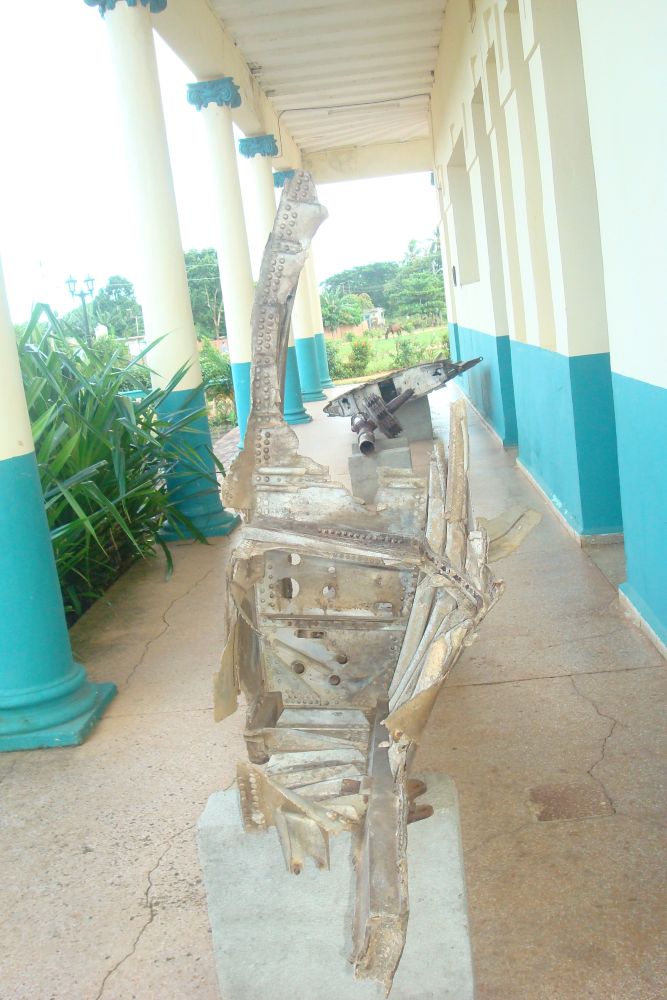
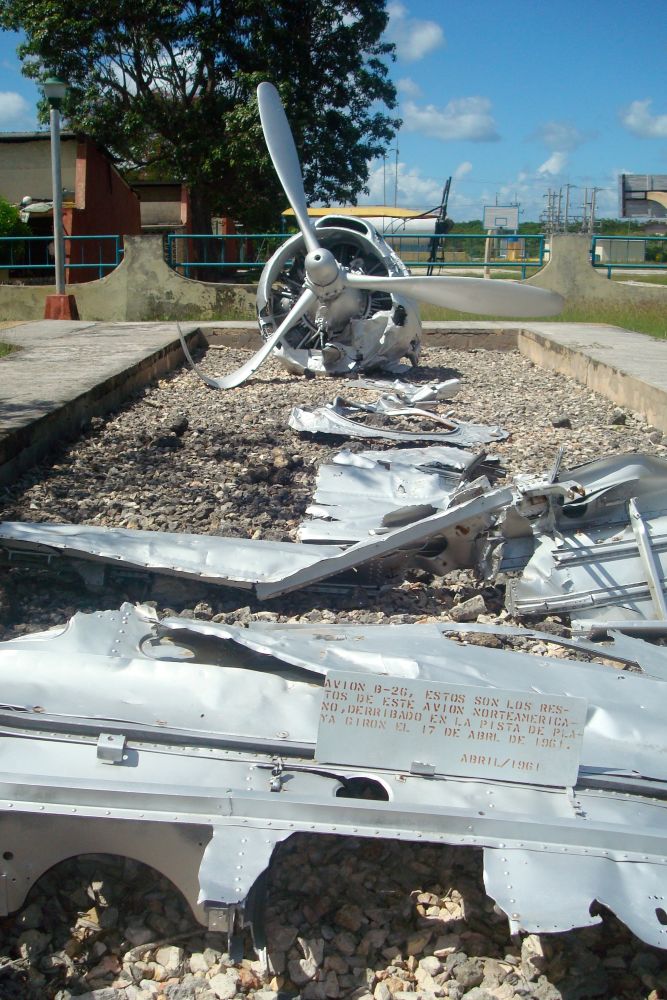
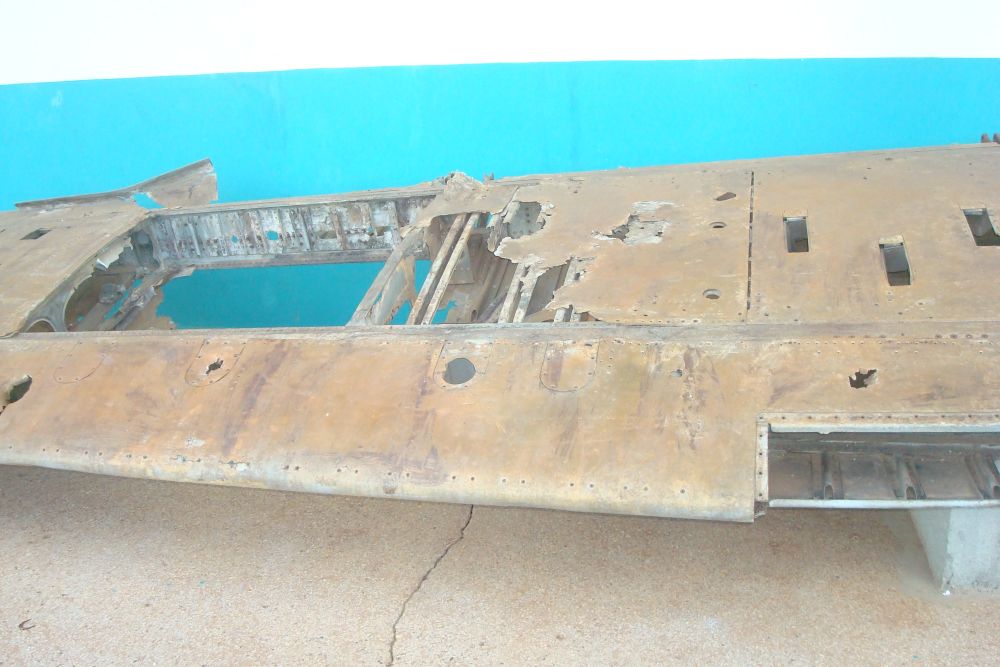
The Art of War: Part trophy of Cuba’s triumph over “the Yankee invaders” and part historical relic, the pieces of downed US aircraft flown by Cuban exile pilots of the US-backed invasion force, Brigade 2506, gleam like art works made of metal in the bright afternoon sun. Photograph by Matthew Joseph, Playa Girón, 2013.