- Bohío lost in time
 Read more
One of the last places in the Caribbean where we can still see hand-built stucco and palm-thatched homes known as bohíos—in the lived environment and not in a museum—is Cuba. Because most of the construction materials and knowledge for how ...
- I, Spy
 Read more
In the 1970s and 1980s, the newly East German-trained Ministry of the Interior designated certain hotels and special hotel rooms for the exclusive use of American visitors. Cuba’s state security outfitted them with the latest surveillance equipment, particularly recording devices, ...
- “Inventing” Public Transportation
 Read more
When Cuba’s Soviet-supported busing system stopped service because of gas shortages, the state “invented” an urban system of providing rides on flat-bed trucks normally reserved for use in agriculture. In Havana, prospective passengers mostly policed themselves, jumping on and off ...
- The Façade of Change
 Read more
In the 1990s, the Cuban government used billboards like this one to announce the future appearance of hotels and other tourist facilities in a failed attempt to secure the public’s support for its partnerships with foreign investors. In this case, ...
- Cuban Surrealism
 Read more
Strolling down El Prado, once Havana’s most beautiful and iconic street, almost exactly thirty years after he, his wife Nancy, and their son Carlitos had left Cuba, UF professor and historian Neill Macaulay must have thought he was walking through ...
- Caught by Surprise?
 Read more
When Cuba turned to international tourism as a source of revenue in the late 1980s and early 1990s, one of the things citizens often noted was the fact that foreigners loved to photograph them. That they didn’t seem to mind ...
- Painting or Picture?
 Read more
Flanked by a landscape of royal palms (a native icon of Cuba), these two peasant homes and their front yard gardens predate the Cuban Revolution of 1959. They speak to the resilience of Cuba’s guajiros amidst the beauty of nature ...
- Machado’s National Highway
 Read more
Cuba has only two national highways that connect one province to the other. The second, built with Soviet money and never completed, was an autopista designed to double as a landing strip for Soviet planes in case of war with ...
- Sailing School in the Special Period
 Read more
Young students at an elite government boarding school near Marina Hemingway compete in an individual sailing competition in this photo, taken shortly before the Soviet Union and the trading bloc on which Cuba relied disappeared. When massive Soviet aid vanished ...
- How to Adopt a Deer in Cuba
 Read more
After the Cuban state’s adoption of Communism in 1961, hunting was strictly prohibited for average citizens and gun possession was authorized only for members of Cuba’s vast security and armed forces. Nonetheless, because any kind of meat was regularly unavailable ...
- Keepers of the Wedding Crystal
 Read more
When I first met my Tía Jorgelina and Tío Tiki for the first time in the fall of 1996, I was astonished to discover that they had saved my parents’ set of crystal, a gift from my grandparents on the ...
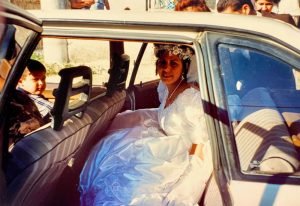
- A Special Wedding in the “Special Period”
 Read more
Like all weddings, this one involved meticulous planning. Unlike similar celebrations across Latin America, it also reflected the unique realities of Cuba’s Special Period. When the Soviet Union vanished several years earlier, all commercial products disappeared from government rations. Once ...
- Signing Cuba’s 1976 Family Code
 Read more
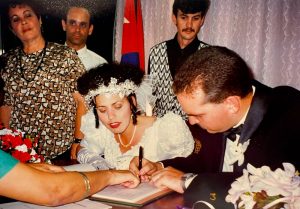
The bride, her mother-in-law and guests look on in this picture as the groom signs Cuba’s Family Code, a culminating moment in all island weddings since the mid-1970s. Passed in 1976, the Family Code responded to Fidel Castro’s admission two ...
- Old-Fashioned Cuban Panetela
 Read more
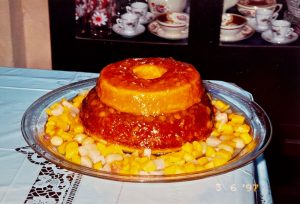
A homemade example of a traditional Cuban-style pound cake, this panetela was made with two of the greatest luxuries in the Cuban diet during the Special Period: milk and butter. I also coated and decorated with a food item whose ...
- The Street Sign as Historic Witness
 Read more
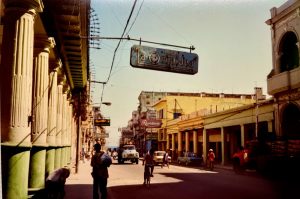
Of the four signs legible to passersby on Calle Belascoaín, a main thoroughfare of Centro Habana, when I took this picture in 1995, only one advertised for a still-functioning business: the rest (including a flower shop and record store) had ...
- The Missing Eagle
 Read more
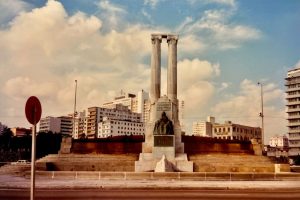
When the adoption of socialism elevated the Cuban Communist Party to the pinnacle of power in 1961, its leaders acted to remap the landscape of memory and history in Havana by removing, defacing, or destroying its most iconic, Republic-era monuments ...
- Faces of Revolution
 Read more
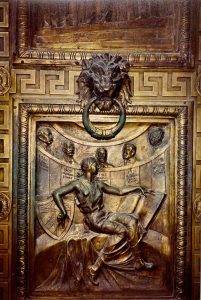
In 1995, when I first visited Cuba, the door to the Capitol building, constructed by the regime of President Gerardo Machado (1925-1933), still showed the evidence of public outrage over his betrayal of the Republic and democracy. Literally defaced by ...
- Cuba’s Capitol Building amidst Post-Soviet Crisis
 Read more
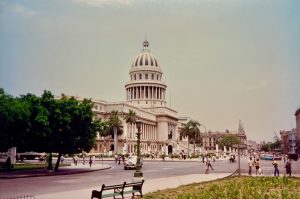
Once Fidel Castro shelved elections and representative democracy, what had once been an aspirational symbol of government accountability, the home of Cuba’s Senate and House of Representatives, became a museum. When I first visited Cuba for a month in June ...
- Uncle Tiki’s Polki
 Read more
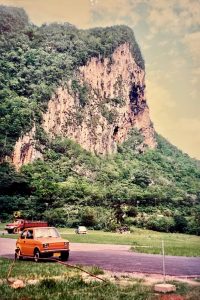
Nicknamed “la aspirina” by Cubans, this teeny-tiny car manufactured in Soviet-controlled Poland was more formally called El Polki. Stick shift and extremely fuel efficient, Tiki’s Polki had been a reward granted to my grandmother, Aurora Almirall, in 1963 on the ...
- Mingo gets the job done
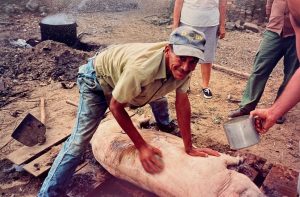 Read more
Perhaps one of the greatest skills a man can learn in Cuba is how to kill (or as peasants used to say, sacrifice) a pig without cruelty or suffering on the part of the pig. When I was growing up ...
- REAL Chicharrones
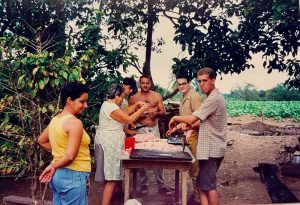 Read more
In Pinar del Río, when my uncle’s family sacrificed a pig, all those who showed up to help chop up and fry its considerably thick layer of fat into odd-sized squares got to keep a portion. Raised on palmiche, the ...
- Casa de Margot, frozen in time
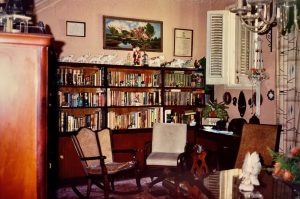 Read more
When I went to Cuba for the first time in the summer of 1995, I assumed that the story of Cubans who lived in virtually the same environment as they did in 1959 was a fiction or myth. Boy, was ...
- Communist “Monopoly”?!
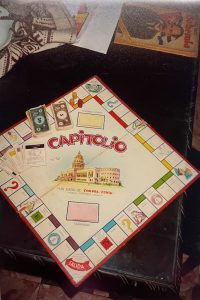 Read more
At the time of the Cuban Revolution of 1959, most average Cubans were deeply critical of the United States’ support for military dictatorships (like Cuba’s own under Fulgencio Batista) as well as monopoly capitalism. Yet Cubans were also enamored of ...
- Going to the Beach, Cuban-style
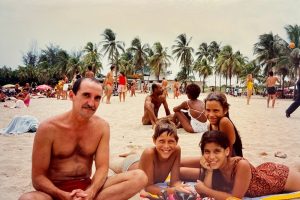 Read more
As anyone who has lived with Cubans outside of the political elite can attest, two “basic” items most lacking—from the 1970s to the present—are towels (of any kind) and napkins. In fact, I only discovered I was a sloppy eater ...
- “HERE ANY TOURIST IS FREER THEN WE ARE”
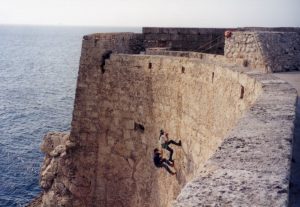 Read more
As happens in most majority-poor countries dominated by authoritarian regimes, foreigners in Cuba often enjoy far more freedom than local citizens. To anyone familiar with Fidel Castro’s prior claims to have created the most anti-imperialist, socially just, and therefore “freest” ...
- THE SHOES OF DON TOMÁS
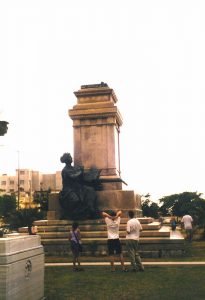 Read more
On a single night in 1961, the Cuban Communist Party carried out a “lightning operation” that physically removed all evidence from Havana’s iconic monuments of what leaders considered Cuba’s imperialist past. Famous examples included the toppling of the massive brass ...
- THE MYTH OF CUBA’S GRATEFUL INDIAN
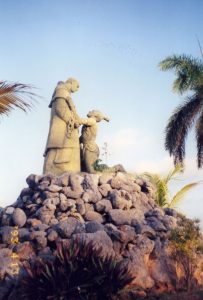 Read more
Whether applied to its native people or the descendants of enslaved Africans, a long-standing fiction survives in Cuba that non-whites were deeply grateful to individual whites, as this monument argues, or whites in general, for having “saved them” from either ...
- 100 SHADES OF BROWN
 Read more
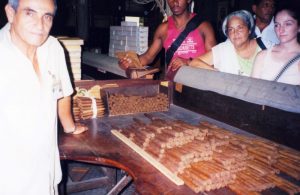
As the granddaughter of Agustín Guerra, an orphan who worked as a field hand until he could establish a tobacco farm of his own in the 1920s, I confess to loving Cuba’s exquisite cigars—even though my father, Agustín’s son, cringed ...
- “ART IS A WEAPON OF THE REVOLUTION”
 Read more
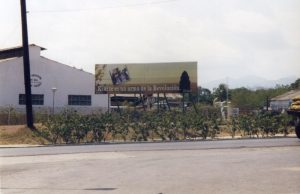
First announced by Fidel Castro in 1967, what might have been a mere off-the-cuff remark in any other context quickly became a decades-long policy and slogan that demanded adherence from all artists, writers, and cultural workers. Left up to the ...
- An Enslaved Mason’s Ingenuity
 Read more
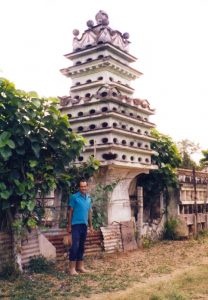
In June 2001, my students and I visited El Ingenio Carolina, a sugar plantation founded in 1835 by slave-owner and foreign investor William Hood Clemens. Fancying the use of an enslaved labor force a premier example of American ingenuity, Hood ...